Another kind of power
Halifax-based Planetary Technologies is leading the charge on ocean alkalinity research by boosting the ocean’s ability to help us fight climate change, putting both Halifax and Nova Scotia on the map in terms of world leadership in this promising new scientific arena.
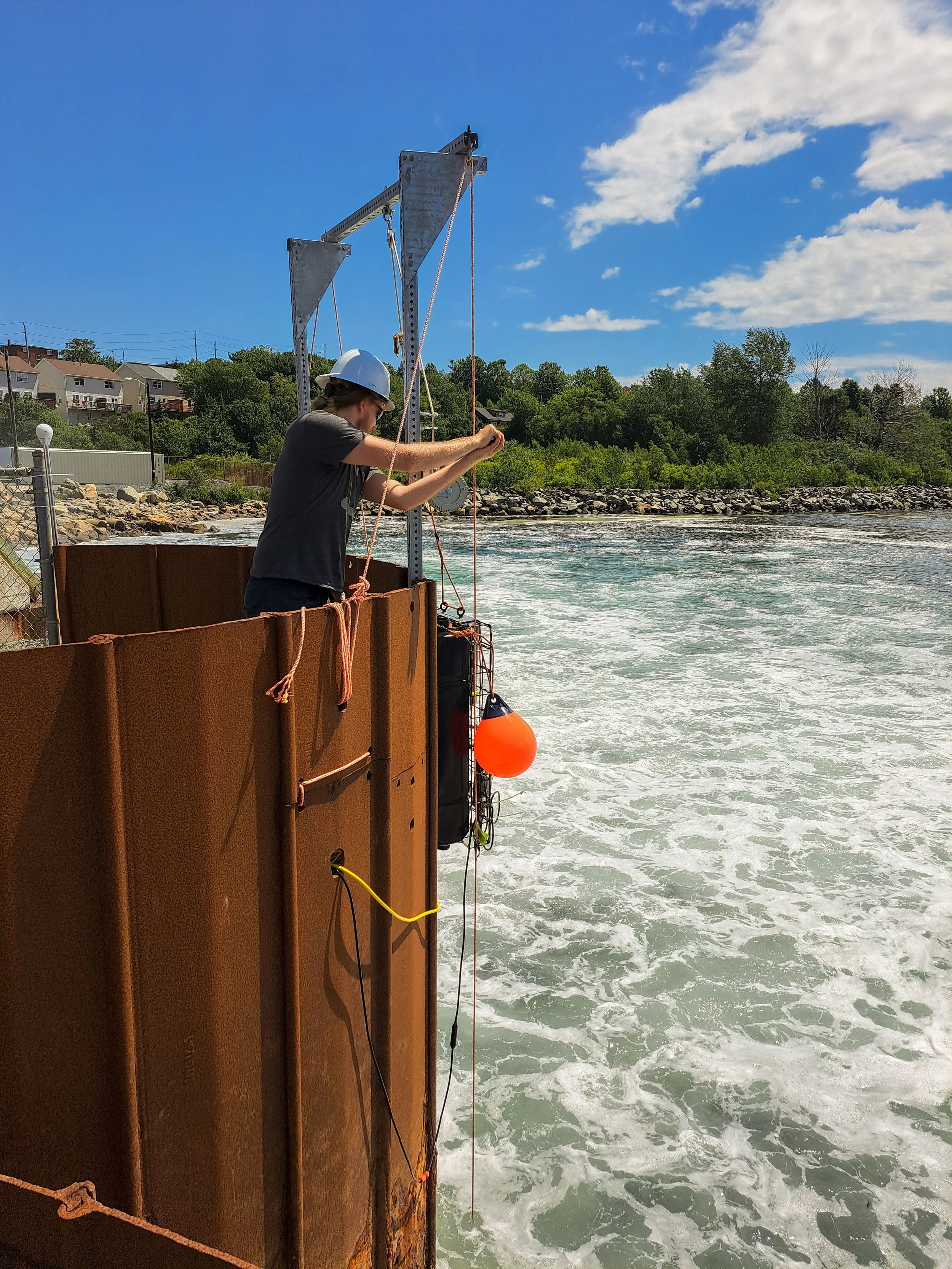
Alex Whitworth of Planetary Technologies testing the water at the Tufts Cove site. Photo courtesy of Planetary.
In the somewhat ironic shadow of three power plant smokestacks, just below the surface of a small area of churning water in Halifax Harbour, another kind of power is being generated.
The power of guarded optimism on climate change.
It’s here that Planetary Technologies is helping restore the ocean’s natural ability to absorb carbon dioxide from the atmosphere and store it safely in the sea for tens of thousands of years. The Dartmouth, Nova Scotia-headquartered company is adding natural, purified alkaline minerals to seawater, which combine with atmospheric CO₂ to form stable bicarbonate and carbonate ions.
These ions can be used by aquatic organisms to form shells. Unused bicarbonate remains dissolved in the ocean for thousands of years, slowly transported into the deep ocean through natural circulation.
The Carbon-Ocean Connection
The ocean absorbs around one-quarter of the carbon dioxide produced by human activities each year. But the mixture of water and CO₂ creates carbonic acid, which threatens coral reefs and aquatic species, including mollusks (clams, mussels, snails) and crustaceans (lobsters, crabs, shrimp).
As greenhouse gas (GHG) emissions rise, our oceans become increasingly acidic as the carbon-ocean balance is thrown off-kilter. But what if you could introduce something antacid-like to enhance the alkalinity of seawater, thereby transforming CO₂ into something that can help heal marine ecosystems while boosting the ocean’s role in atmospheric health?
“By adding alkalinity to the ocean, you soak up some of the CO₂ in the water,” says Dr. Will Burt, the VP of Science and Product for Planetary. “Then that creates what I describe as a vacuum, where you've got less carbon in the surface water than you did before, and so the CO₂ from the air moves in to fill the void. And if we can keep enough alkalinity in the ocean, we’re helping the natural process of moving carbon from the sky to the sea.”
Planetary is a leader in coastal Ocean Alkalinity Enhancement (OAE), which accelerates a geological process called rock weathering that has naturally regulated the Earth’s carbon cycle for millennia. As more CO₂ in surface waters is converted into these natural bicarbonate and carbonate ions, more atmospheric carbon is drawn back into the water to restore equilibrium. Planetary currently uses magnesium to adjust alkalinity.
“The genesis of the company is actually decades ago,” says Mike Kelland, CEO of Planetary. “Dr. Greg Rau is a marine ecologist working in academia, which led him to a deeper understanding of the carbon cycle in the ocean. He pioneered a lot of work on ocean alkalinity enhancement but wanted to take it from academia to the real world, to properly explore and test to see if this is a climate change solution.”
“I’m a serial entrepreneur and wanted to do something with a positive impact for the planet. So, another co-founder and I teamed up with Dr. Rau. We started Planetary and leveraged the innovation funding that’s available here in Canada,” Kelland says.
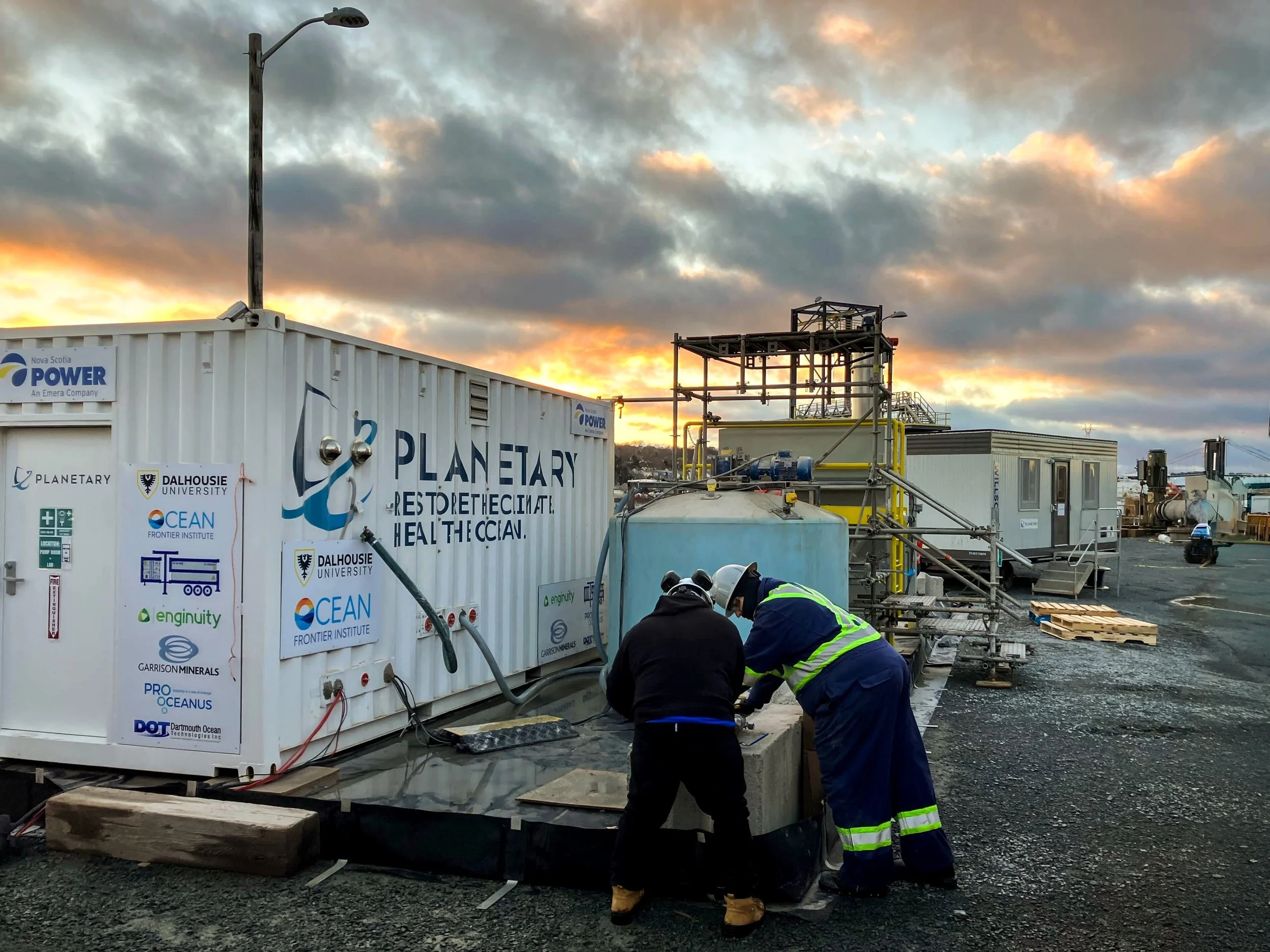
Planetary equipment at the Tufts Cove project site. Photo courtesy of Planetary.
Proof of Concept
The Planetary approach is not just wishful thinking in the face of climate change; the company has scientific data that shows the method is indeed boosting the ocean’s ability to absorb carbon dioxide.
“We do bi-monthly surveys throughout the harbour and many here at the site where we add the minerals,” says Alex Whitworth, a Planetary Site Operator at Tufts Cove. “We take water samples on the surface, and also just above the sea floor, as well as sediment samples.”
“Our measurements are showing an increase in the CO₂ concentration just below the surface — the carbon is being absorbed into the water.”
The Tufts Cove project, which started operating in the fall of 2023, is their flagship initiative, a small facility based at the Nova Scotia Power natural gas generating station that uses the plant’s established water-cooling outfall system to add alkalinity to seawater. Planetary has also conducted pilot projects in the Elizabeth River, in Virginia, and in the U.K., in St. Ives Bay, Cornwall.
All told, independent certification company Isometric estimates that Planetary has so far removed over 4,800 tonnes of carbon dioxide from the atmosphere. This is roughly equivalent to the carbon sequestered by about 5,000 acres of forest in one year.
The Intergovernmental Panel on Climate Change (IPCC) has acknowledged that emissions reductions are not going to be enough to meet our climate targets, and carbon dioxide removal (CDR) will be needed to counter-balance emissions from certain sectors, adding that the “future deployment of CDR will require rapid and sustained upscaling.”
This pronouncement spurred a boom in carbon removal startups, and huge companies such as Microsoft have said they will spend billions buying credits on the emerging carbon removal credit market. Planetary was the first company in the world to deliver independently verified ocean alkalinity enhancement carbon removal credits, purchased by Stripe, Shopify, and British Airways.
Frontier Climate is an “advance market commitment” whose members include Google, Shopify, and Stripe. In August 2025, Frontier’s buyers also signed an agreement worth more than $30 million with Planetary to remove over 115,000 tonnes of carbon dioxide by 2030.
The Planetary Approach
The Tufts Cove project on the Dartmouth side of Halifax Harbour, with Nova Scotia Power’s iconic red and white candy cane smokestacks rising 500 feet into the sky behind it, is the blueprint for how Planetary views its operations now and into the future.
Planetary does not operate in the open ocean; instead, it taps into land-based, coastal outfalls at existing infrastructure sites, such as power plants or wastewater treatment facilities. If a water outfall system is already in place, it’s a cost-effective way to add alkalinity. Using existing outfalls minimizes the need for infrastructure, allowing any given site project to fit within two shipping containers while still delivering 10 kilotonnes of carbon removal potential. The small physical footprint of the operation also minimizes electricity consumption.
“Our dry materials get mixed in with some harbour water and are then added into the water loop that Nova Scotia Power uses to cool their turbines,” says Whitworth. “It’s then released in an outfall close to shore, one of four outfalls at Tufts, around 190,000 litres a minute. You can see the bubbles from this discharge, and everything disperses quite quickly into the harbour.”
Nova Scotia Power is working to decarbonize its energy mix and has been supportive of Planetary’s operations. The carbon removal company has gradually scaled its initiative at Tufts Cove, moving from a one-week pilot to multiple weeks, then months, and finally to a year-round operation. They currently add alkalinity five days a week but hope to step that up to seven days. As they increase their output, they are guided by monitoring and what the data tells them.
The “antacids” the company uses are derived from industrial by-products. Planetary currently uses a magnesium material that comes from Spain. It’s a byproduct generated during an existing magnesium oxide production process. Magnesium oxide is produced for a range of established industrial uses, including agriculture, animal nutrition, and refractory materials such as heat-resistant bricks.
“Instead of it going to waste, Planetary takes this byproduct material and further processes it for use in ocean alkalinity enhancement,” Whitworth says.
A Drop in the Ocean
But the Nova Scotia Power water outfall is a drop in the Halifax Harbour, and the harbour is a drop in the ocean. Can Planetary’s approach make that much of a difference?
“No, we’re all wasting our time,” says Kelland, tongue firmly in cheek. “Of course, I think it can make a huge impact. Think of all the millions of kilometres of coastline, and all the water outfalls already in operation. If we tap into these, and work within existing permits, the potential impact of carbon reduction is in the billions of tonnes.”
Planetary’s Burt is also excited about the potential. He came to the company after a stint as a professor of oceanography at a university in Alaska. He had been keeping an eye on the carbon removal happenings in Halifax, where he had done his PhD at Dalhousie in Oceanography (his first paper was actually on ocean acidification in the Bedford Basin).
“You take Tufts Cove, which isn't the most massive outfall you can imagine. There are much bigger ones, but it’s not small,” Burt says. “Once all four outfalls at Tufts are in play, there is around 10,000 tonnes of carbon removal potential.”
“Now, if you found 1,000 of those outfalls around the world, you're at millions of tonnes a year. Think about all the coastlines all over the world, and all the power plants and treatment plants that exist…replicating something like what we have in Tufts Cove 1,000 times over, or more, is not unreasonable to me,” he says.
Closer to home, Planetary is looking to create a “hub” of sites for OAE across Nova Scotia.
It does require some positive thinking, Burt admits.
“There may be plenty of reasons that people will bring up about why we can’t do this, but I like to think there’s no reason we can’t replicate what we’ve done here. We’re on a really scary trajectory in regard to climate, and at this point we all need to be intervening,” he says.
Is it Safe for Marine Life?
However, “intervening” in the natural world can be a disconcerting concept to many. One concern that gets raised is the possible impact of OAE on the fisheries, a sector very important — economically and culturally — to the Atlantic region and to Indigenous communities.
“It’s a very reasonable question,” says Burt, “and that’s why we’re not scaling to the level of the one thousand Tufts Coves I mentioned without more data and monitoring. We can learn a lot from the small-scale projects underway.”
The main fisheries risks from ocean alkalinity enhancement will probably come from how and where alkaline materials are added, not from the alkalinity itself. The science to date suggests OAE can be environmentally safe at a large scale, but localized additions at coastal sites could cause short-term pH spikes.
“The concerns are very real,” Kelland says. “But they are controllable, and we can learn from what’s already being done. Around the world, we add these alkalinity materials to the ocean all the time. Every wastewater processing plant includes these kinds of minerals in their cleanup process before it goes into the ocean, to control acidification and carbon from biological degradation.”
“Every permitting agency has a very clear understanding of what the safe limits are of these kinds of materials within a particular region. We’re working within that context; the big difference is why we are doing it. We’re not remediating wastewater; we’re doing it to remove carbon from the atmosphere.”
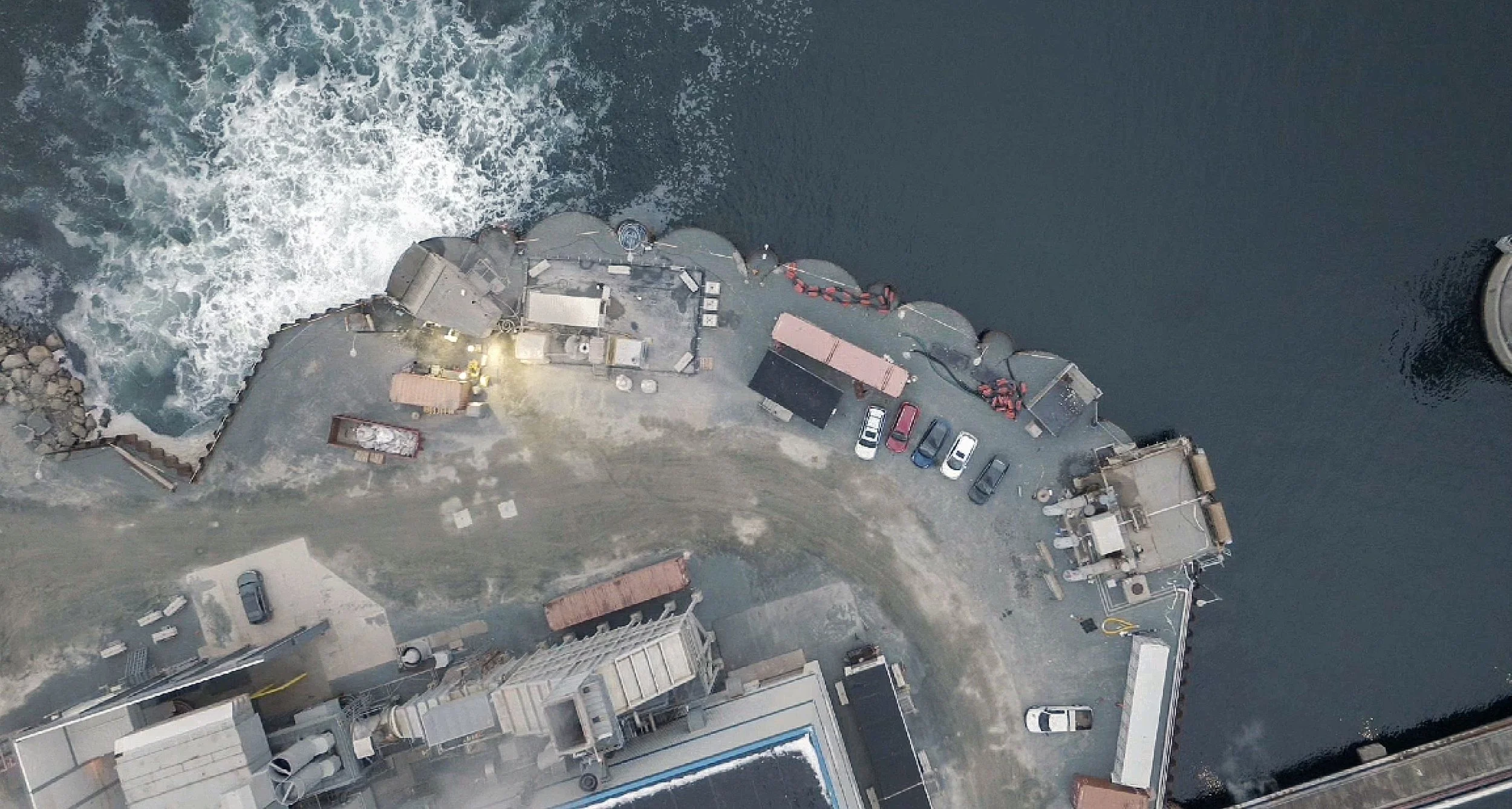
The water outfall at Planetary’s Tufts Cove Site, where alkalinity materials are added. Photo courtesy of Planetary.
Continued research is needed to look at fish responses to rapid pH changes, if suspended particles before they fully dissolve can irritate fish gills, and if OAE changes ocean chemistry in a way that impacts phytoplankton and zooplankton.
And that research is being done. In April, the Carbon to Sea Initiative — a global nonprofit dedicated to evaluating ocean alkalinity enhancement for CO₂ removal at scale — held its latest “Annual Convening” in Halifax. OAE scientists and practitioners from around the world met for three days to share knowledge and explore how to scale up safely, ethically, and efficiently.
Planetary’s Joint Learning Opportunity, a collaboration with Carbon to Sea and MEOPAR, is further advancing OAE research. It brings together academics, the private sector, and public organizations to support research, innovative sensing methods, and social engagement efforts in Nova Scotia.
A New Pillar of Climate Action
Planetary’s approach can be an effective way to reduce atmospheric CO₂, but it can’t replace the need to drastically reduce carbon emissions.
At the Carbon to Sea conference, former federal cabinet minister and current Canadian Ambassador to the European Union, Jonathan Wilkinson, stressed that the Canadian government supports carbon removal as “a complement to, not a substitute for, deep emissions reductions.”
In Atlantic Canada, home to Planetary and similar company CarbonRun, Wilkinson noted there is an “emerging ecosystem in which philanthropy, startups, universities, public institutions and governments are beginning to engage seriously with marine carbon removal. OAE represents a potentially important additional tool in the fight against climate change, domestically and internationally.”
“Emissions reductions and carbon removal will go hand in hand,” says Daniel Kelter, Senior Director of Public Affairs for Carbon Removal Canada, an independent non-profit working to accelerate the responsible scale-up of carbon removal technologies.
“International bodies overwhelmingly agree that some level of permanent carbon removal capacity is going to be needed to hit net zero. It’s the net in net zero at the end of the day,” he says.
But trust in the process is key.
“We need solid and transparent MRV (measurement, reporting, and verification) to build that trust,” says Kelter. “If we build the proof, OAE, I think, is one of the potentially lowest cost pathways to scale, to help de-acidify the ocean, to bring back salmon populations, to improve waterways for the next generation.”
Planetary measures the outcomes of their projects and has third-party agencies verify their findings. They also partner with academic institutions and regulators to ensure safety and performance. And in Nova Scotia, they’ve established a first-of-its-kind Two-Eyed Seeing Committee for coastal OAE, bringing Indigenous knowledge and Western science into governance and practice.
“That’s why we are having conversations with so many people well before we add anything to the water,” says Will Burt. “We need to learn from people who live and understand the water and their coastal communities, especially Indigenous communities who have known these waters for a long, long time.”
“Scaling ocean alkalinity enhancement is not always easy,” Burt admits. “Starting the operation was hard. Maintaining and expanding the operation is harder. But something this important was never going to be easy.”
**
This story is part of a special series on marine-based climate solutions that is supported by the Carbon to Sea Initiative, the Marine Environmental Observation, Prediction and Response Network (MEOPAR), and Planetary Technologies.