Rivers to the Rescue
Given half the chance, nature can not only rebound but, in some cases, do the heavy lifting in our fight against climate change. That’s exactly what two water quality researchers discovered while working to improve the health of the West River in Pictou County, Nova Scotia.
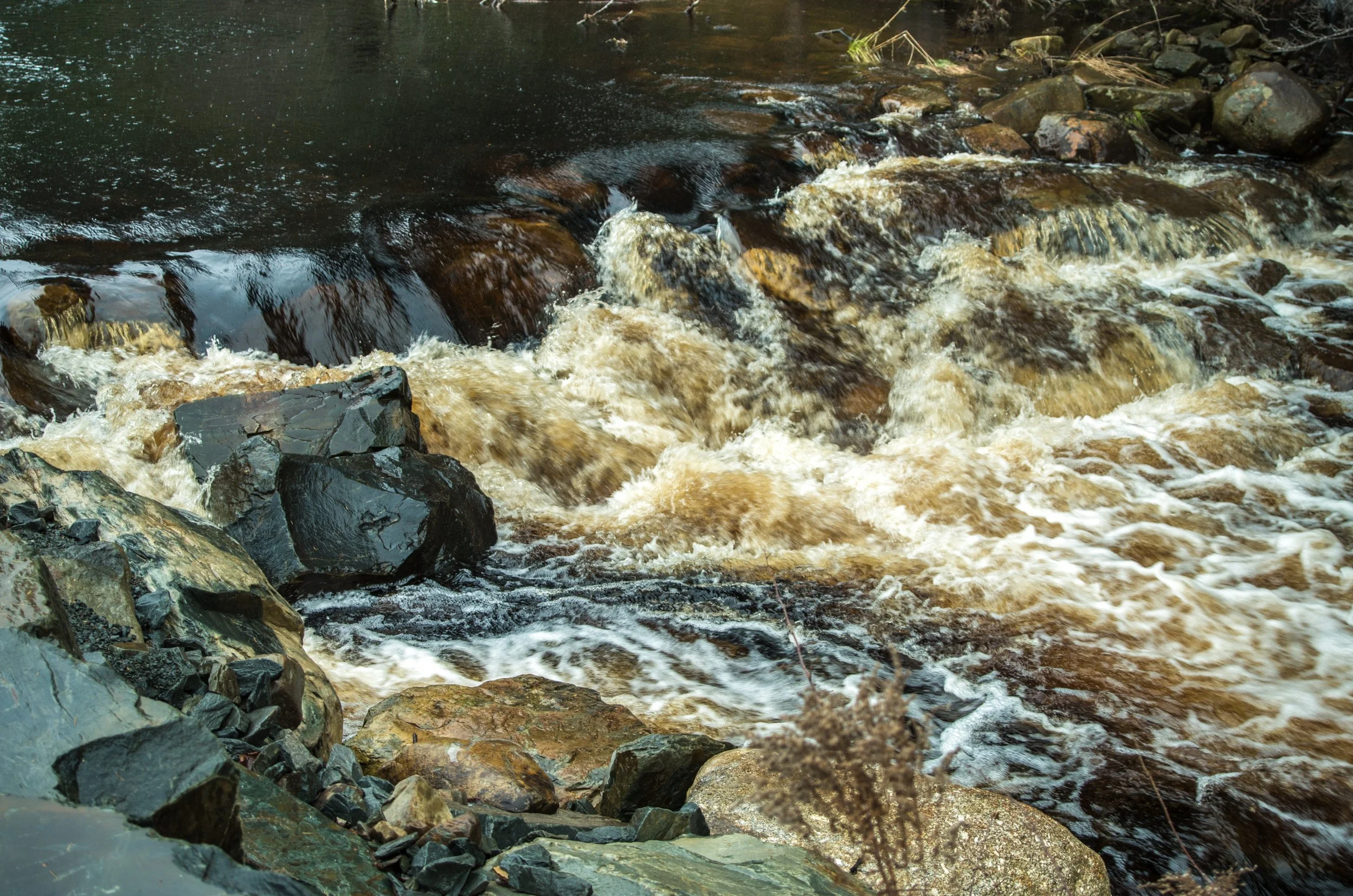
The West River in Pictou Co., Nova Scotia. (Photos by Sean Kelly)
Dr. Eddie Halfyard has always cared about fish, and by extension, rivers. Some might say that’s what makes him the best guy for the work he’s found himself doing.
Halfyard, a freshwater ecologist and native Nova Scotian, works alongside Dr. Shannon Sterling, an associate professor of Earth and Environmental Sciences, to restore rivers' natural ability to carry carbon to the sea for long-term storage.
Research into how to save fish stocks in overly acidic rivers led him, in 2005, to be involved in the first limestone dosing project in North America to improve the water quality by increasing alkalinity.
Sterling, a British Columbia transplant, joined Dalhousie University in 2009. A hydrologist by trade, she was motivated to dive a little deeper into the health of some of the province’s rivers after discovering the plummeting fish numbers in the four which were being monitored.
“The culprit was acid rain,” she says.
Originally just working with the Nova Scotia Salmon Federation with a focus on improving river health, over a two-year period (2016-18), the duo noticed something they hadn’t expected to find.
“When dissolving the powdered limestone (dosing) into rivers — to balance acidity levels and reintroduce important minerals like calcium and magnesium — we noticed carbon dioxide (CO2) was being consumed as it dissolved,” says Sterling.
It was a development the two immediately knew could have potentially huge implications in terms of the larger fight against climate change.
A fairly simple concept in the often complicated world of science, the idea is this: when carbon combines with limestone, it forms bicarbonate, some of which is used by aquatic species for shells, with the rest eventually flowing into the ocean for storage for thousands of years.
This accelerates a geological process called rock weathering, which has naturally regulated the Earth’s carbon cycle for millennia. As more CO2 in surface waters is transformed into these natural deposits, more atmospheric CO2 is pulled back into the water to reestablish equilibrium.
“So that discovery was a lightbulb going off and we realized this was big in terms of carbon markets and an integral part of how we get to net zero,” says Halfyard.
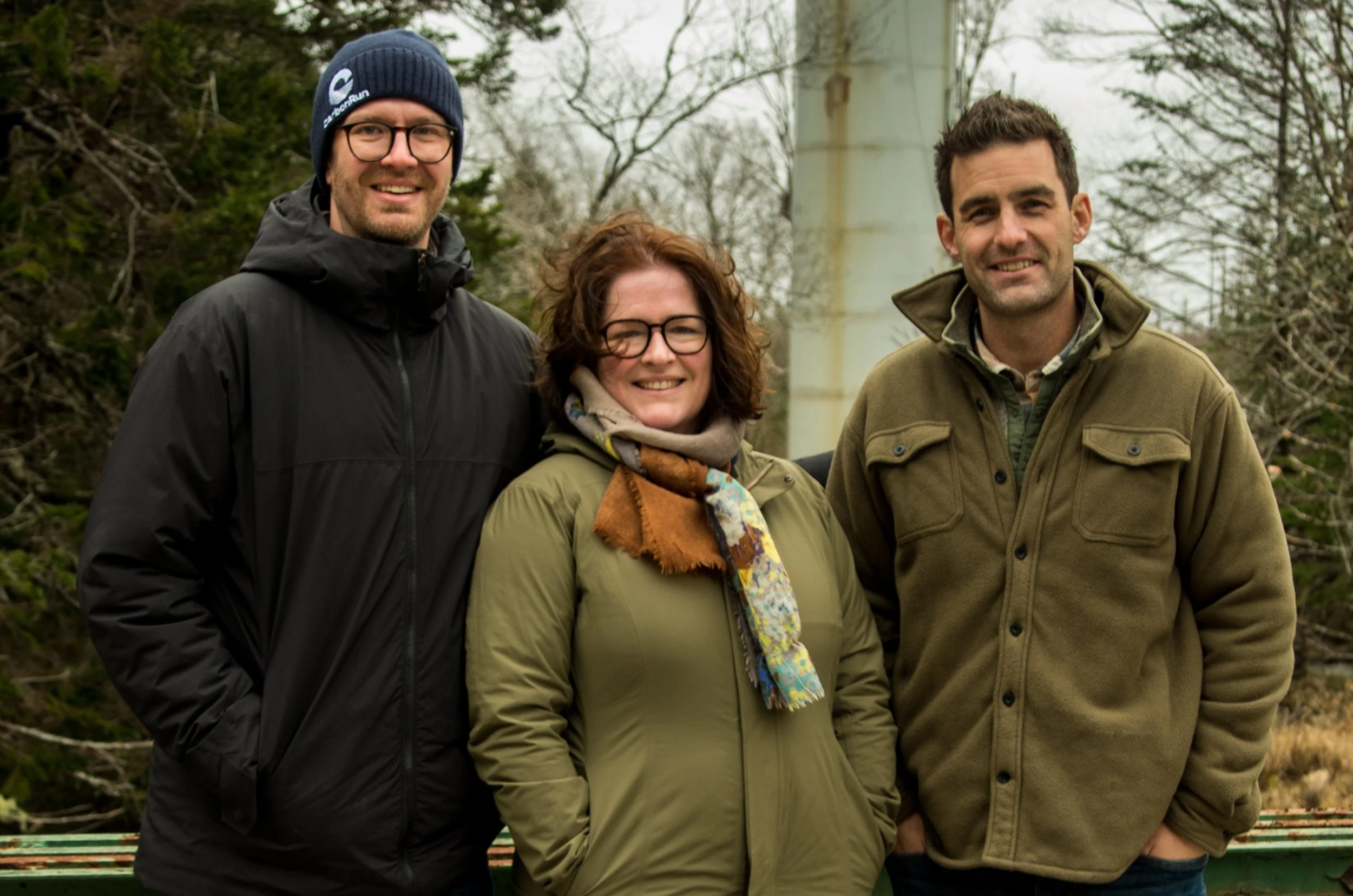
(l to r) CarbonRun founders CEO Luke Connell, Dr. Shannon Sterling, and Dr. Eddie Halfyard
And so, in 2022, the two decided that the formation of a company to help aid the world in targets to decarbonize made the most sense. Sterling, along with Halfyard and Luke Connell from the Omega Foundation — which provided Sterling’s Dalhousie Lab with the first donation to get what became CarbonRun off the ground — rounded out the founding trio.
Much like the Ocean Alkalinity Enhancement (OAE) work being done by what Halfyard refers to as “sister companies” like Halifax’s Planetary Technologies, CarbonRun works to improve river health by changing the alkalinity of overly acidic water. Planetary, unlike CarbonRun, currently uses magnesium to affect alkalinity change, though will also begin experimenting with hydrated lime later this year.
“In Nova Scotia, rivers that were on the brink have been brought back to health through this process, and fish populations, including Atlantic salmon, have also increased,” says Halfyard.
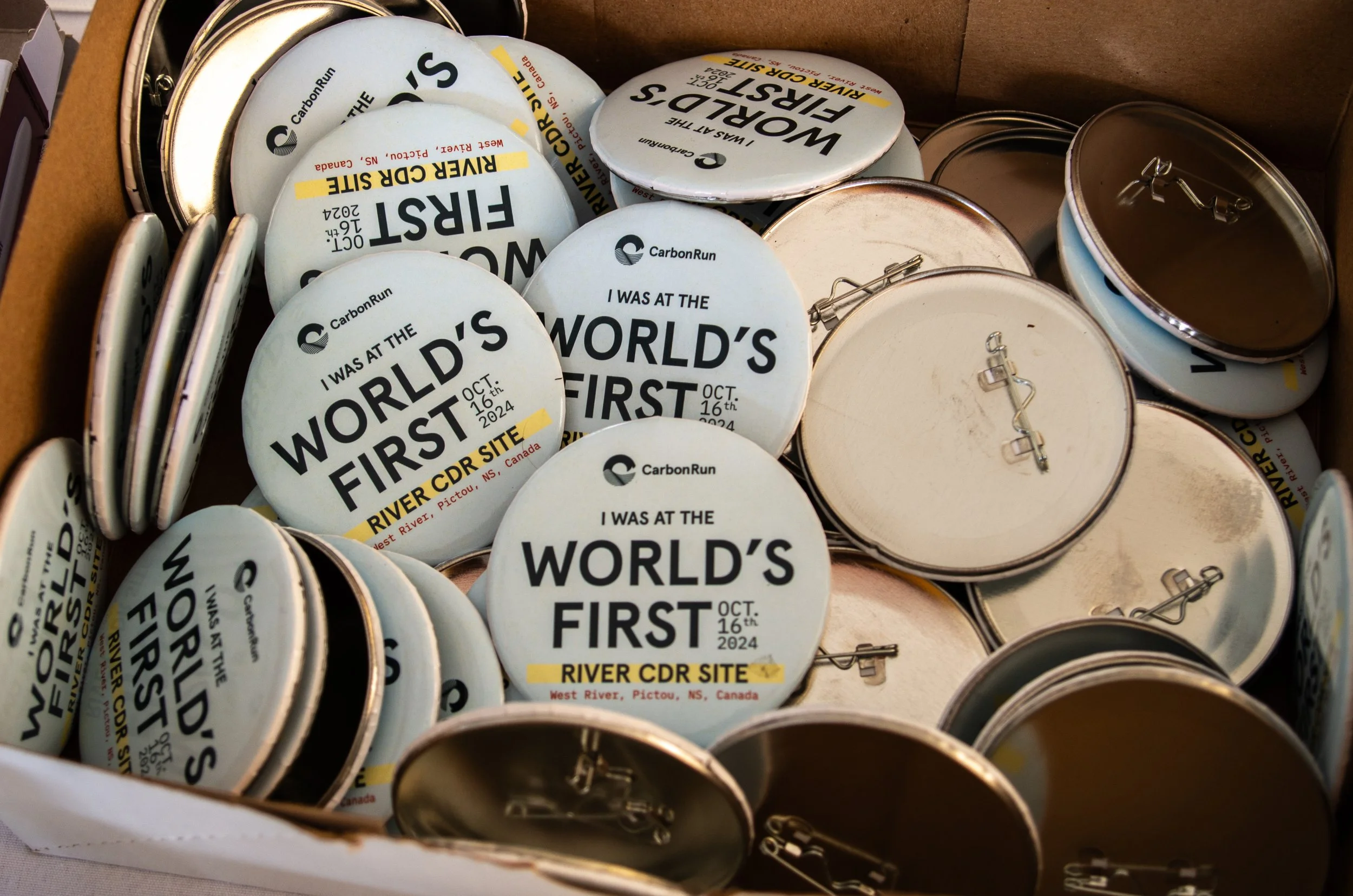
CarbonRun’s first official dosing operations — for carbon removal and separate from the NS Salmon Association work — launched in West River, Pictou, in summer 2025. The world’s first carbon dosing system, it was possible because of a 2024 carbon credit deal worth $24 million with Frontier Climate, a consortium of companies that voluntarily put $1 billion pledge together to invest in carbon dioxide removal, specifically processes that lock away carbon for a thousand plus years.
“A lot of it is American money, and the U.S. was the main source of all the acid rain pollution in the first place, as well as fossil fuel burning,” says Sterling.
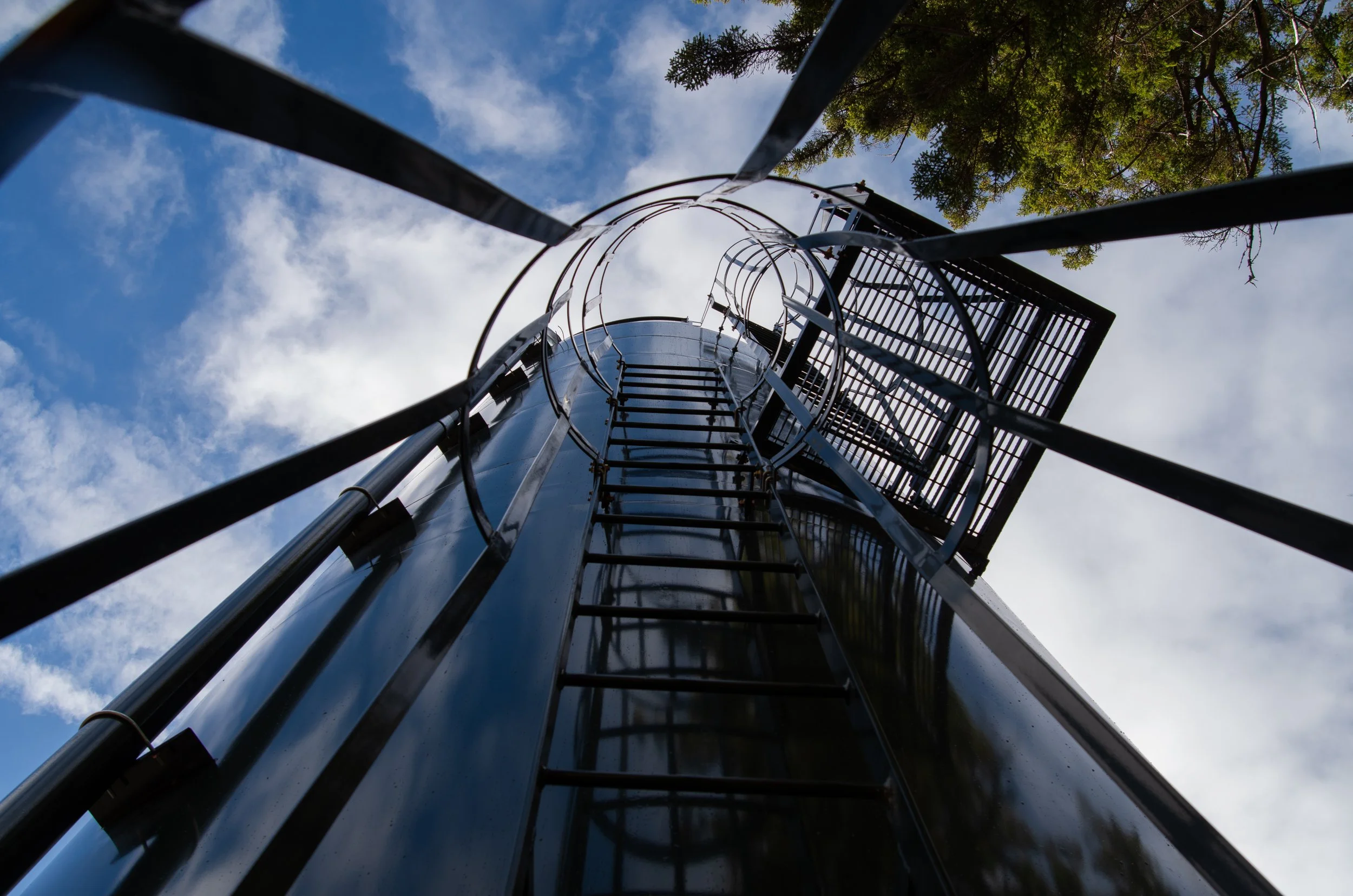
CarbonRun’s doser on the West River.
The doser, which runs autonomously, 24 hrs. a day, adds ground limestone, as needed, with sensors controlling and administering based on water flow; all of which will be remotely communicated through computer and cell phone, recording data as it goes.
And lately, says Halfyard, CarbonRun has been moving at what he calls a “frenzied pace.” They’ve just completed a river project in Norway and are now able to issue the world’s first verified river alkalinity enhancement credits from that project, which have been brought to market in the last few months.
In terms of climate action and attitude, Halfyard tells me that the world is different now than it was even as recently as 2022 when they opened their doors.
“Things have changed geopolitically, and that means there are things that are outside of our control as a company, an industry, or our country,” he says. “What we’re seeing is that these companies are less willing to stick their neck out when there may be repercussions for doing so.”
Even with those changes, says Halfyard, it doesn’t mean the need or the interest in purchasing CO2 credits is any less than it was, but is experiencing a new era of keeping fairly quiet about it.
“I think we’re seeing more and more ‘green hushing,’ where companies continue to invest and support carbon dioxide removal, they just don’t want to talk about it as much,” he says.
As part of their contract with Frontier, CarbonRun has until 2030 to remove 50,000 tons of CO2. A target Halfyard says they’re on track to meet.
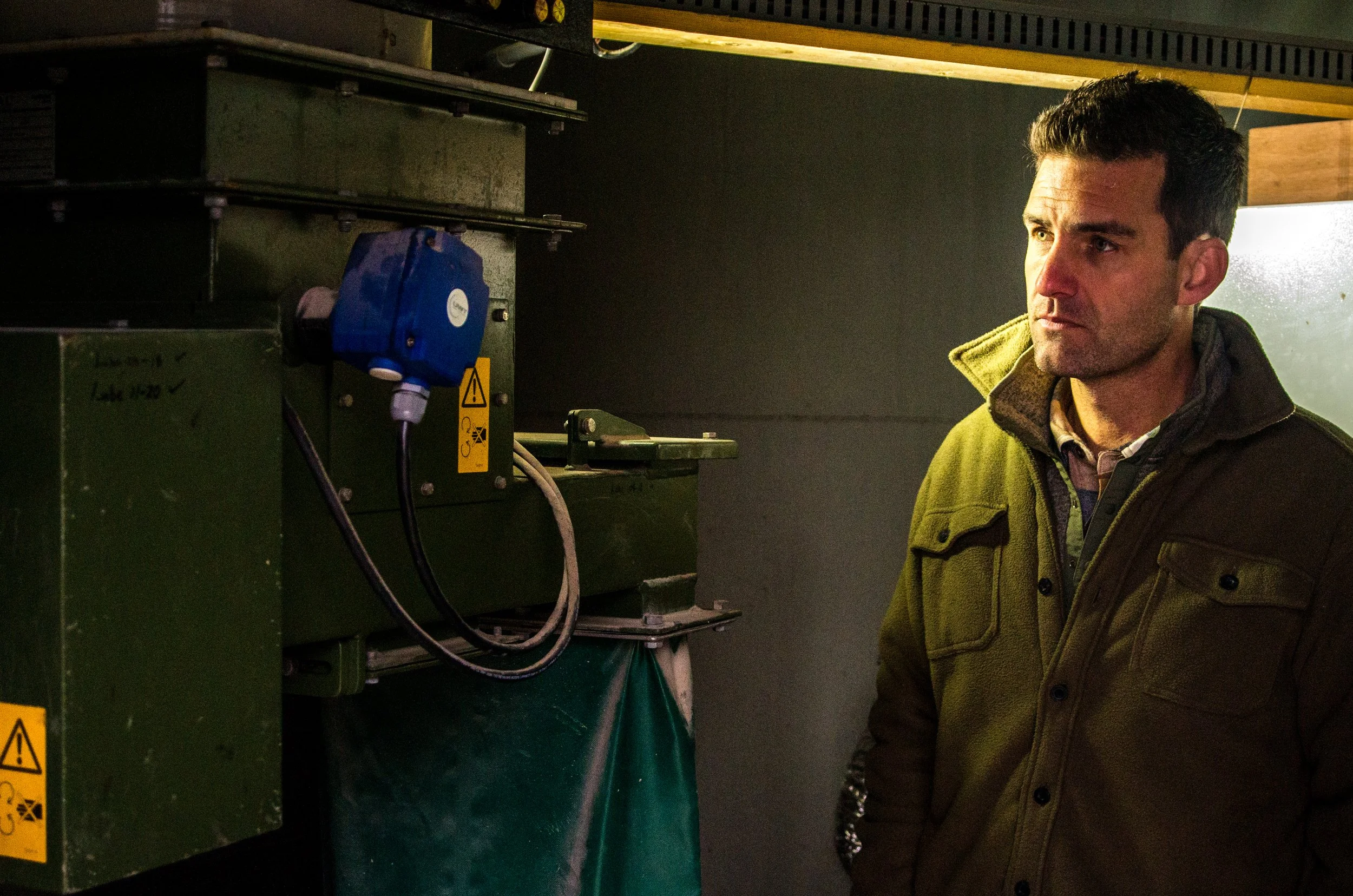
Dr. Halfyard inside a river doser.
“We continue to plug along and do the hard part of all this, which is actually getting the projects off the ground and running, and I’m happy to say that a lot of the big pieces that are required to make that happen are now in place,” he says.
Part of that move forward is CarbonRun’s work with Isometric, a third-party verifier and auditor of carbon credits.
“Working with them, you know, this protocol is now publicly available and shows exactly what has to be done, how things have to be measured, some of the social engagement side of things in order to have a reputable project and right down to the details of how you calculate river alkalinity enhancement. So that’s a big step forward for us,” he says.
What’s next for CarbonRun? Right now, the group is excited to be starting a new dosing project on the iconic Moser River on the province’s eastern shore. A bigger river than their Pictou location, Halfyard says things are going better than expected so far, partly due to its chemistry being more conducive to CO2 removal, but also a result of refining their hardware and software processes.
“It’s only been running since April 10 of this year but has already surpassed all the carbon work that we’ve done in the Pictou River over the last year and a half,” he says.
They’re also looking at expanding through partnerships — both nationally and internationally, where and when suitable or possible. Halfyard tells me work with groups in the Eastern United States is temporarily put on hold, but beyond that, he says, is a whole world of potential partnerships, with a staggering 400,000 rivers internationally that could, to some extent, benefit from the technology.
“You know, our future will be about expansion into many areas, into rivers that were not typically considered for passive rain mitigation, but could be well suited for river alkalinity work,” he says. “And we’re also going to really look into co-development of projects, potentially licensing with project developers and seeing what it looks like from that angle.”
And in terms of what this technology might mean in real terms for rivers and communities not only in Nova Scotia, but throughout Eastern Canada, and beyond (the group is expanding into Quebec, where they’re currently doing the important work of relationship building), is the ability to tap into the world of carbon credits, which means a cost-free option for towns looking to not only clean up their rivers, but to also aid in the fight against climate change.
“What’s exciting about this work is that there’s zero cost to communities,” says Halfyard. “It’s also a whole new way for out-of-country money to support restoration here in Nova Scotia and beyond.”
**
This story is part of a special series on marine-based climate solutions that is supported by the Carbon to Sea Initiative, the Marine Environmental Observation, Prediction and Response Network (MEOPAR), and Planetary Technologies.